New Zealand top of leader board for avalanche contribution to glaciers

Anyone who spends time near New Zealand’s glaciers will have pondered how snow avalanching affects our glaciers. It turns out, the answer is more than anywhere else in the world.

Marin Kneib from ETH in Zurich, Switzerland and colleagues have recently found avalanches contribute 15 % of the snow accumulation to New Zealand’s glaciers. This was the highest contribution for any glacier region of the world.

Most global climate change projections of glaciers ignore avalanche effects. Kneib wanted to know if this mattered or not. As it turns out, Kneib found that for any particular glacier, inclusion of avalanche processes could make a big change to climate change projections, but at the global level the effect was fairly minimal. It seems that the lack of explicit inclusion of avalanche processes is compensated for by adjustment of modelled snowfall. This means that at the large scale everything comes out pretty similar. The conclusion of Kneib’s work is that global projections of glaciers that ignore avalanches are probably OK.

The side effect of the research is that in New Zealand, we can claim top spot for avalanche contributions to glaciers. Well done New Zealand.

Marin Knieb’s research was published in Nature Communications.

Glaciers plus rain equals earthquakes

Konstantinos Michailos from the Australian National University and co-authors have found that clusters of earthquakes occur near to the Fox Glacier/Te Moeka o Tuawe, Franz Josef Glacier/Ka Roimata o Hine Hukatere, Tasman Glacier/Haupapa and Murchison Glacier/Te Hiwai. What is more, the shallow earthquakes at these locations have seasonal cycles, generally peaking in winter, summer, or both. Digging even deeper, they found that for the Murchison Glacier/Te Hiwai earthquake cluster there was a correlation with high rainfall events. The hypothesis they present for this rainfall-seismicity relationship is that when general strain rates within the basement rocks are high, increased groundwater pore-water pressure caused by large rainfall events can be enough to trigger earthquakes. This is a convincing story, but they also point out that the spatial differences in rock types, groundwater depths, strain rates, glacier dynamics, snow-induced land deformation and monitoring equipment means that the rainfall-earthquake relationship is not clear-cut everywhere. So for the Murchison Glacier/Te Hiwai area it may be reasonable to tack earthquake occurrence onto the end of the weather forecasts. Elsewhere there is still some work to be done before “weather” based earthquake forecasts might be applied.

Chilean and Argentinian glaciers fill in for the gaps in the New Zealand glacier team

In a recent calculation of how much ice has been lost from the world’s glaciers, New Zealand’s lack of measurements proved problematic for the researchers. Inés Dussaillant (from the University of Zurich) and colleagues combined manual glacier measurements with satellite glacier elevation data to derive annual changes in glacier mass for each of the glacier regions of the world since 1976. The work assumed a region’s annual glacier mass anomaly could be reasonably estimated from available manual measurements. In New Zealand there are only two glaciers with annual mass measurements, the Brewster and the Rolleston. To beef this up a bit the authors decided to add in data from the Martial Este glacier in the Argentinian part of Tierra Del Fuego. The next problem was that neither the New Zealand or Martial Este measurements extend back very far. To fix that, the study’s authors used the measurement record from Echaurren Norte, a glacier in Chile that has a record going back to 1976. Perhaps it should not be a surprise that New Zealand had the lowest score when the calculations were assessed for robustness by excluding one glacier’s data out of the equation. They removed the Brewster’s data, thereby leaving the Rolleston Glacier and the two South American substitute glaciers as the representatives for the Southern Alps.

Fortunately, the comprehensive assessment has been prepared in such a way that enables re-calculation as new data comes available. So when some additional New Zealand glaciers start being regularly measured, they’ll be able to be used, and the Chilean and Argentinian glacier substitutes will be able to be returned to the bench.

SIRG 2025 highlights

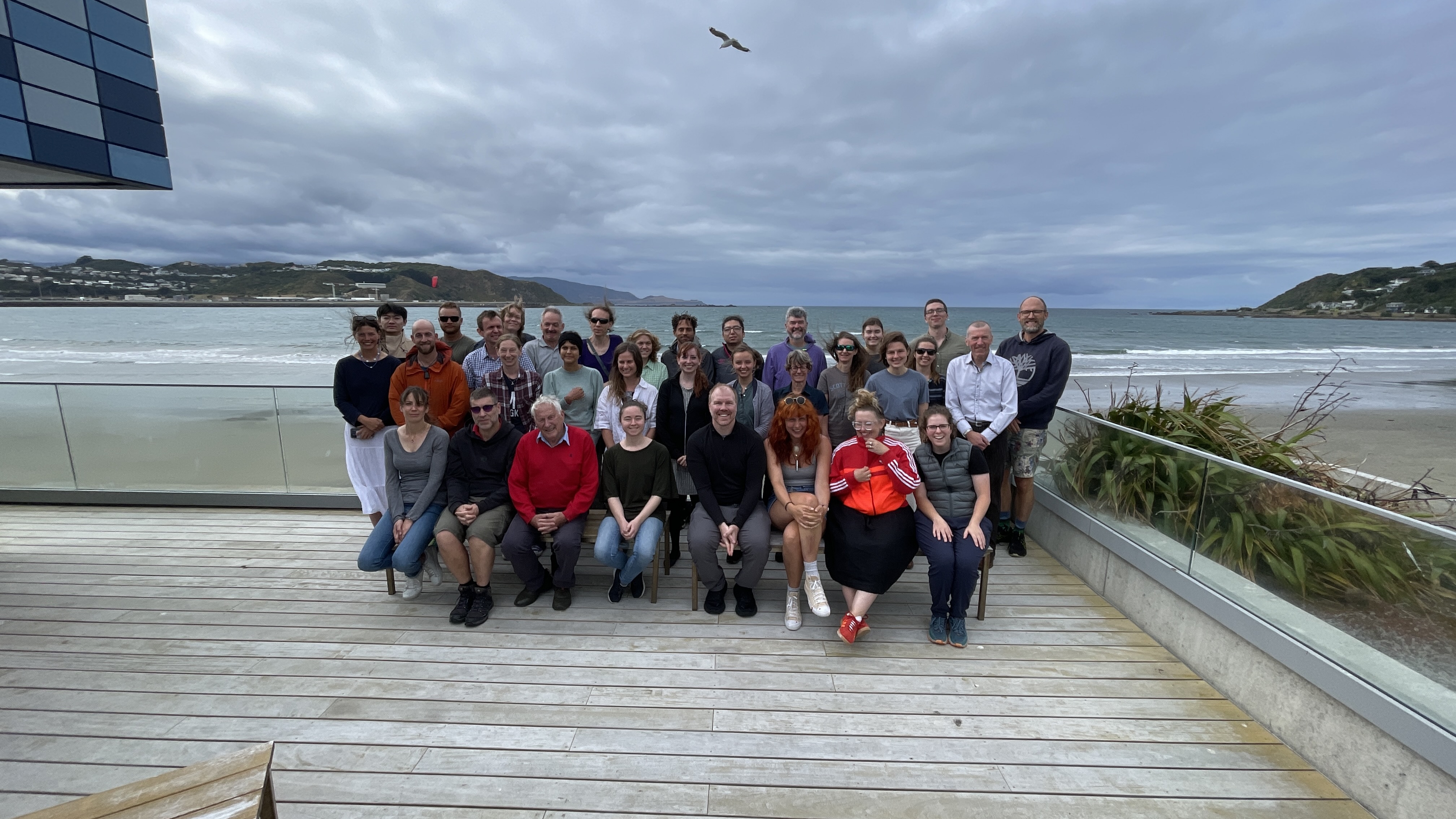
We had a wonderful joint SIRG and SIS (sea ice symposium) meeting at the Lyall Bay Surf Lifesaving Club in Wellington from 10 – 12 Feb, with ~40 attendees!

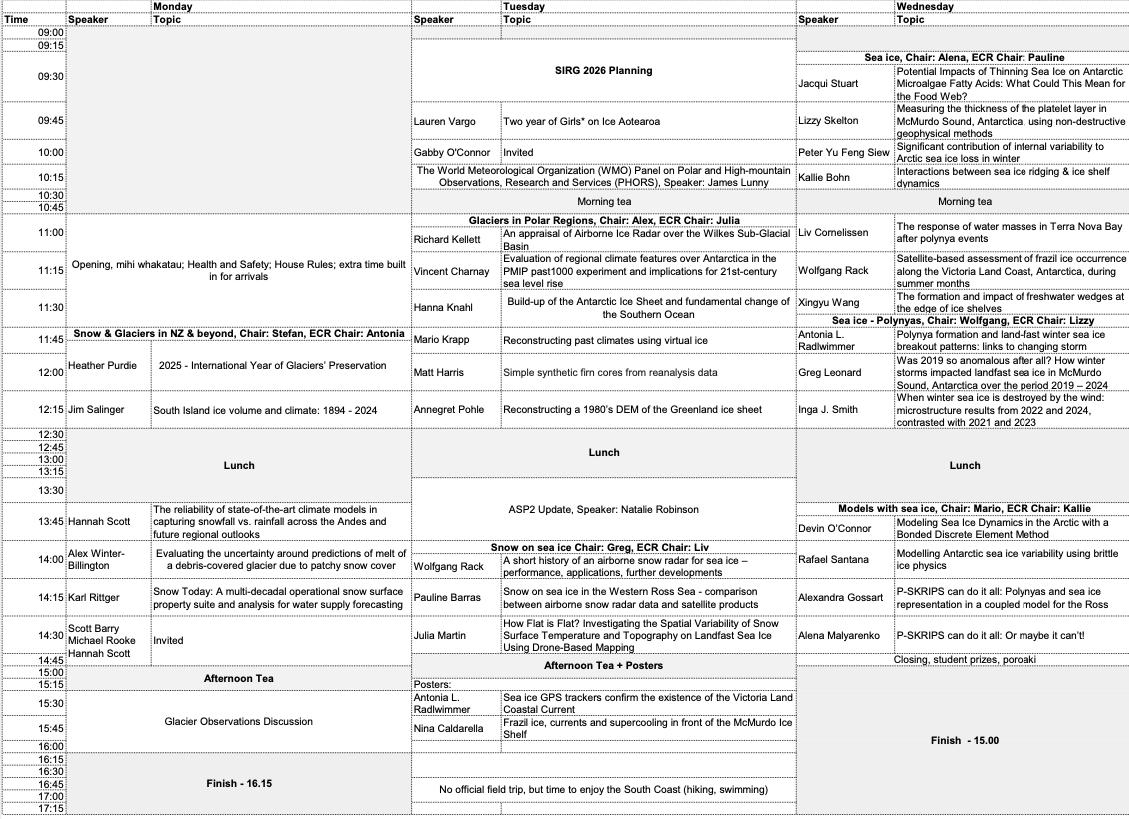
Student talk prizes, sponsored by the Antarctic Science Platform, were awarded to Hanna Knahl for a talk titled ‘Build-up of the Antarctic Ice Sheet and fundamental change of the Southern Ocean‘, and Lizzy Skelton for a talk titled ‘Measuring the thickness of the platelet layer in McMurdo Sound, Antarctica, using non-destructive geophysical methods‘.

Thanks to everyone who joined for making it a wonderful event, and thanks to our sponsor, the Antarctic Research Centre (VUW)!

Here’s the program from the meeting:

International Year of Glacier’ Preservation

The United Nations declared 2025 as the International Year of Glaciers’ Preservation. It was launched on 21st January. Dr Heather Purdie of the University of Canterbury in collaboration with Dr Brian Anderson of the Victoria University of Wellington provided the first Side Event where they summarised the glacier monitoring efforts occurring in New Zealand. This was followed by a creative “weather report” of the Haupapa/Tasman Glacier.

There are a large number of events planned for the year, not least of which is the inaugural International Glacier Day on 21st March.

2024 SIRG Workshop details and registration information 

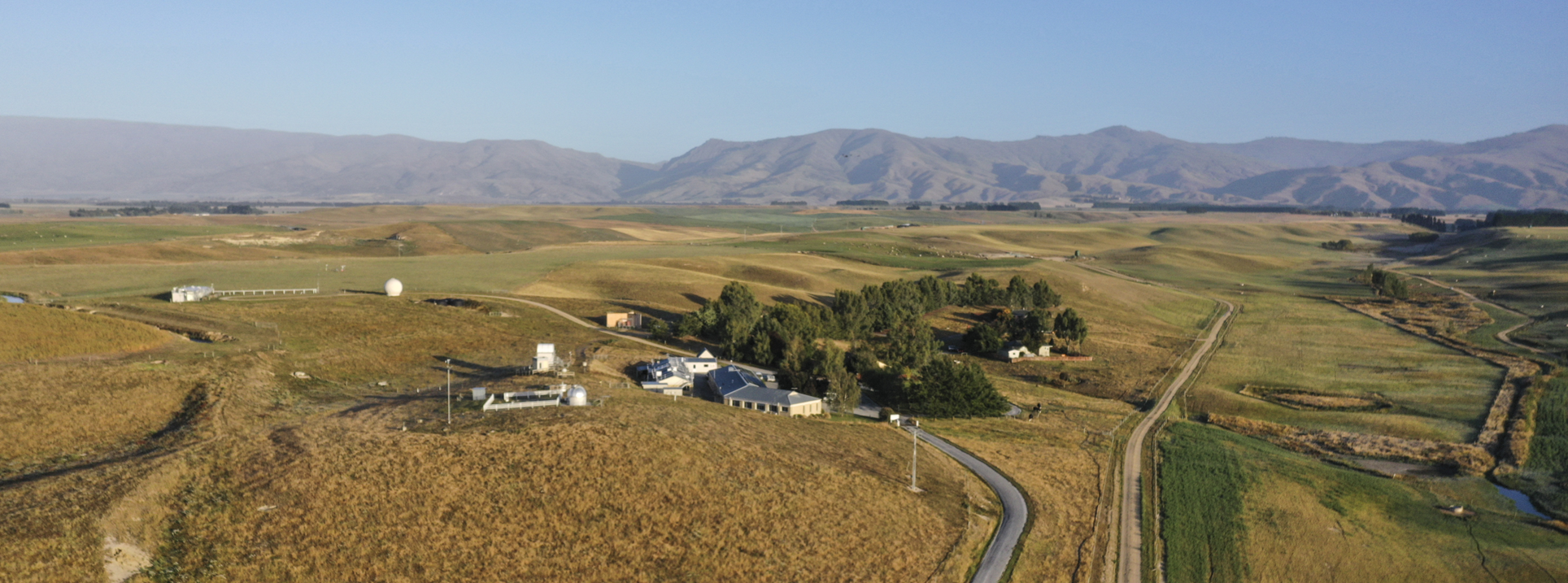
NIWA Lauder Atmospheric Research Station

Key details

Where: Lauder, Central Otago. Workshop sessions will be held in the Becks Hall (7 min drive from NIWA Lauder) with accommodation available at NIWA Lauder and Becks Hall (camping only).

When: 14 – 16 February 2024. Presentation sessions will run over the afternoon of Wednesday 14 February and all day Thursday 15 February. A field trip on Friday 16 February will conclude the workshop.

Who: SIRG 2024 is open to all researchers with an interest in snow and ice. We particularly encourage students to attend and tell us about their work regardless of their research stage!

What: We welcome presentations on all topics related to the cryosphere, including seasonal snow, glaciology, snow and glacier hydrology, glacial geomorphology, and sea ice, in Aotearoa New Zealand, Antarctica, and further afield. The presentation format will be 15-min talks.

Registration 

Registration is now open and closes on January 14, 2024. The registration page is accessible here. For 2024, registration fees are: 

  • Student (presenting): $0 
  • Student (non-presenting): $50 
  • Non-student: $250 

Registration fees include accommodation (for the nights of February 14 and 15), meals for the duration of the workshop and the field trip (Wednesday dinner to Friday lunch inclusive). We acknowledge the generous support of NIWA and Antarctica New Zealand, which has allowed us to keep registration costs to a minimum. 

Abstract submission

Please prepare your abstract using the template available here. Abstracts must be submitted via email to nzsirg2024@gmail.com by January 14, 2024. 

Travel 

Note that there is no regular public transport to Lauder – if you require transport from Queenstown airport to Lauder, please email nzsirg2024@gmail.com and we will do our best to coordinate ride sharing. Also, please get in touch if you need help connecting with folks travelling from other locations. 

Accommodation 

Accommodation at NIWA Lauder (houses + camping) or Becks Hall (camping), for the nights of February 14 and 15, is included in the cost of registration. The Lauder houses have shared room style accommodation (2-3 people per room) – please bring your sleeping bag, pillow and towel. As there are limited spaces available in the houses, please register asap to reserve your spot. Some camping around the NIWA Lauder houses is available and there is plenty of room for camping at Becks Hall along with showers, bathroom and kitchen facilities.  

Field trip 

The field trip highlights will include a tour of the NIWA Lauder Atmospheric Research Station, exploration of local gold mining-era water races and a tour of Clyde Dam hosted by Contact Energy. Cost included in registration. The anticipated end of the field trip is 1:45 pm at Clyde Dam (to accommodate ZQN departing flights from 4 pm onwards). 

We are looking forward to seeing you in sunny Central Otago in February 2024! 

If you have any questions, please get in touch via email: nzsirg2024@gmail.com. 

Hei konā mai 

The 2024 SIRG organising team  

Jono Conway, Alice Hill, Rasool Porhemmat, Lawrence Kees, Stefan Jendersie, Marte Hofsteenge 

SIRG 2024 is possible through the generous support of NIWA and Antarctica NZ.

Antarctica NZ

SIRG 2024 Workshop – Lauder, Feb 14-16, 2024

Kia ora koutou

We are pleased to announce the dates and venue for the 2024 SIRG Workshop, to be held over February 14 -16 at NIWA’s Lauder Atmospheric Research station in Central Otago. As usual we will have 1 ½ days of scientific presentations starting 1 pm Wednesday 14th February, followed by a field trip on Friday 16th February. Accommodation (houses and optional tenting) is available on site, and the cost of this will be included in the registration fee. SIRG welcomes oral presentations on all topics related to the study of snow, glaciers and sea ice in Aotearoa, Antarctica, and further afield. Student contributions are particularly encouraged. A second announcement will follow with registration details and abstract submission. For now, please register your interest here to assist in our planning. Note, there are funds available to support student travel to the conference particularly from the North Island and shuttle transport from Queenstown airport can be provided. Feel free to direct any questions to nzsirg2024@gmail.com. We are looking forward to seeing you all for an exciting and productive workshop in Central Otago in February 2024 – stay tuned for further updates!

Noho ora mai rā

SIRG 2024 organising team
(Jono Conway, Alice Hill, Rasool Porhemmat, Lawrence Kees Stefan Jendersie, Marte Hofsteenge)

Tiny glacier bears discovered in New Zealand

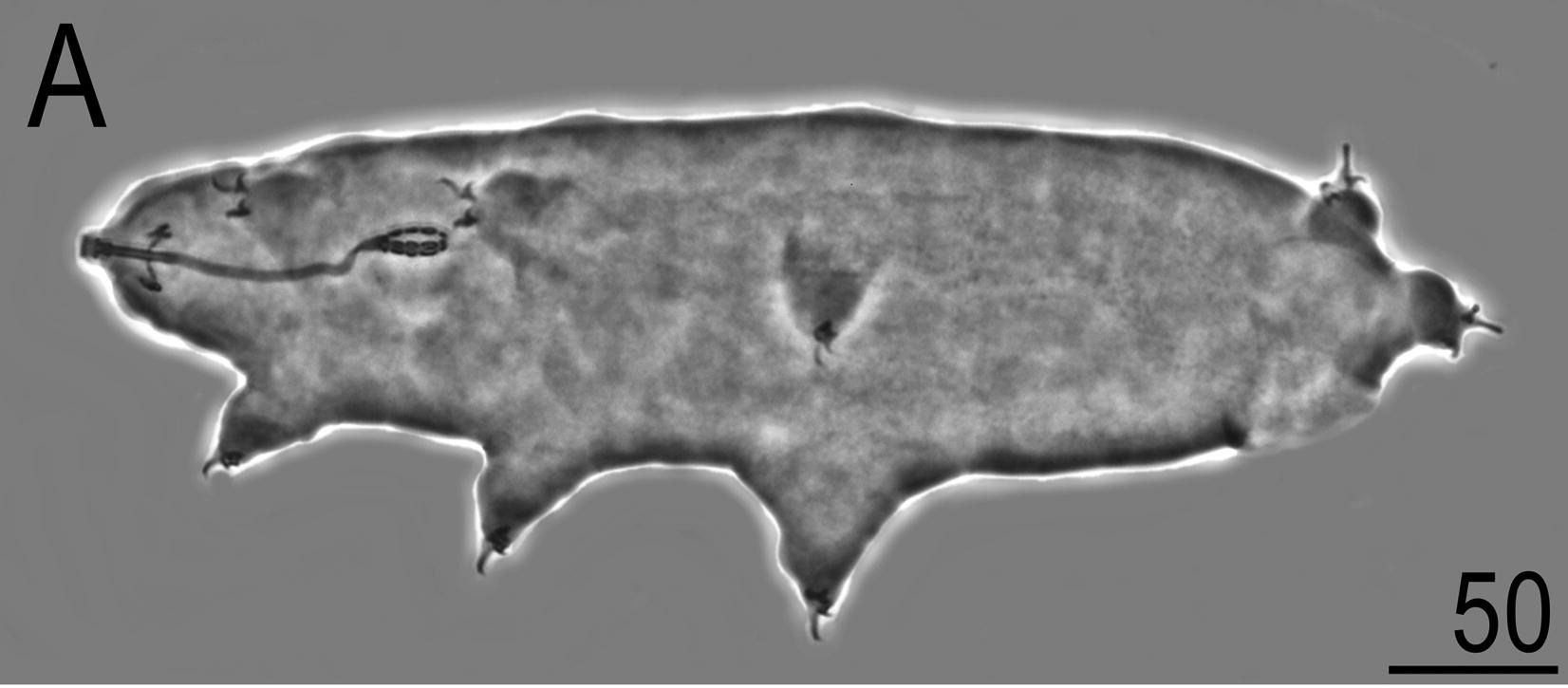
Polish scientist Krzysztof Zawierucha has discovered bears hiding in the snow of New Zealand’s glaciers. More specifically, he and his colleagues have described two new genera of Tardigrades living in the glaciers of the Southern Alps. Tardigrades, also known as water bears, are short fat eight legged animals usually overlooked because they are less than a millimetre long. Tardigrada is a sub classification of the Animalia kingdom (the equivalent sub-classification for humans is called Chordata, then the Mammalia class, the Primate order, the Hominidae family, the Homo genus, and finally the Homo sapiens species).

Krzysztof and colleagues collected snow samples from near the top of the Fox, Franz and Whataroa glaciers. When they melted and filtered out the water and looked at the residue under a microscope, staring right back at them were some Tardigrades (or some equivalent of staring, as they didn’t have eyes). Krzysztof, who is a Tardigrade expert, didn’t recognise the species, or even the genus. After careful consideration of their size and body parts Krzysztof figured out that he was looking at two new genera. One was peculiar for its combination of dark colour, stumpy claws, and big mouth. Krzysztof thought the dark colour could be an adaptation to the high ultra-violet radiation conditions on the snow surface. Similar colouring is found in Tardigrade that live in Central Asian glaciers, so it might be considered an example of parallel evolution. He gave the new genera the name Kopakaius, a latinised version of kōpaka, the Māori word for glacier. He gave the specific species (he only had the one example) the full name Kopakaius nicolae where nicolae is a reference to his wife Nicoletta.

A close-up view of the newly described “water bear” Kopakaius nicolae found in snow on the Fox, Franz and Whataroa glaciers. The scale bar is in micrometres, so the whole bear is about 1 mm long.

The second genera of Tardigrades he called Kararehius, a latinised version of kararehe, the Māori word for animal. This one was transparent and had an unusual combination of stomach sections and claw cuticles. Krzysztof named the species they had collected  Kararehius gregorii where gregorii is a reference to his father Grzegorz.

A close-up view of the newly described “water bear” Kararehius gregorii found in snow on the Fox, Franz and Whataroa glaciers. The scale bar is in micrometres, so the whole bear is about 0.5 mm long.

DNA analysis of the bears confirmed their differences from other Tardigrade in the world but the two genera he found were not as different as the body shapes had first indicated. The DNA analysis found that the Kopakaius nicola bears from the Whataroa glacier were genetically distinct from those found on the Fox and Franz Josef glaciers. Krzysztof argues the differences may be associated with the isolation of populations as the previously-connected glaciers have separated into independent units.

Next time you are up in the glaciers, tread carefully and keep a watch out for bears.

NIWA Snow and Ice Network Information Available

NIWA have started publishing graphs of the snow depth at ten of it’s snow and ice network (SIN) weather stations.

This is a major development. The network was installed about 12 years ago but access to the snow-depth information has to-date been by request only.

The information is published as graph images at https://niwa.co.nz/freshwater-and-estuaries/research-projects/snow-and-ice-network

The graphs don’t provide a scale on the snow-depth axes, but an average line on the graphs means it is possible to see how the current year’s snow depth is progressing in a relative way.

For reference average peak snow depth at Mueller is about 2.5 m, and at Mahanga and Mt Larkins it is about 70 cm.

2023 SIRG Workshop details and registration information

2022 SIRG Workshop postponed

UPDATE (14/11/2022): The 2022 SIRG workshop was postponed due to the change to red settings under the national covid protection framework. Our new dates are February 9 – 11 2023. Those of you who had previously registered for SIRG2022 do not need to do anything. Please don’t hesitate to contact us at nzsirg2022@gmail.com with any questions.

Key details

Where: Coronet Peak, Queenstown, New Zealand. Workshop sessions will be held in the Coronet Peak Ski Area base building, with accommodation available on site at the Otago Ski Club’s Joel Lodge. Coronet Peak is a 25 minute drive from Queenstown Airport. Note that there is no regular public transport to Coronet peak during summer months – if you require transport from the airport to Coronet Peak please let the organising team know and we will do our best to coordinate ride sharing.

When: February 9 – 11, 2023. Presentation sessions will run over the afternoon of February 9 and all day of February 10. The workshop will conclude with a field trip on Saturday February 11, more information about the field trip is available here.

Who: SIRG 2023 is open to all researchers with an interest in snow and ice. We particularly encourage students to attend and tell us all about their work!

What: We welcome presentations on all aspects of research related to the cryosphere, including but not limited to: seasonal snow, glaciology, snow and glacier hydrology, glacial geomorphology, and sea ice, in Aotearoa New Zealand, Antarctica, and further afield.

COVID-19 considerations

While the New Zealand COVID-19 Protection Framework has come to an end, we will continue to monitor any developments to ensure that SIRG 2023 can operate in a way that is safe and comfortable for attendees. Mask wearing is welcome at SIRG 2023. For more information please see https://covid19.govt.nz/.

Registration

Registration is now open and closes on January 20, 2023. The registration page is accessible here. For 2023, registration fees are:

  • Non-student: $150
  • Student (presenting): $0
  • Student (non-presenting): $50

Registration fees include accommodation (for the nights of February 9 and 10), meals for the duration of the workshop and the field trip. We acknowledge the generous support of NIWA, Antarctica New Zealand and Coronet Peak which has allowed us to keep registration costs to a minimum.

Abstract preparation

Please prepare your abstract using the template available here. Abstracts must be submitted via email to nzsirg2022@gmail.com by January 20, 2023.

Accommodation

Accommodation in the Otago Ski Club’s Joel Lodge, for the nights of February 9 and 10, is included in the cost of registration. This is shared bunk room style accommodation, so please bring a sleeping bag and pillow! There are several room configurations available, please indicate any preferences when registering and we will do our best to accommodate these. Please note that camping is not permitted on the Coronet Peak Recreation Reserve.

We are looking forward to seeing you in February 2023!

If you have any questions or require any further information in the meantime, please reach out to the organising team via email: nzsirg2022@gmail.com.

Hei konā mai

The 2022/2023 SIRG organising team.